Buried Alive: The Hyper-Specific Subreddits That Accidentally Preserved the Internet's Weirdest Memories
Nobody set out to build a museum. They just really, really loved their thing — an obscure soda brand, a dead TV show, a hobby so niche it barely has a name. But scroll back far enough in certain subreddits, and you'll find something that feels less like a forum and more like a fossil record.
This is what happens when people talk about something small, and specific, and genuinely beloved, for long enough that the conversation itself becomes the artifact.
The Archive Nobody Meant to Build
Take r/Zima, a subreddit dedicated to the malt beverage that defined a very particular flavor of '90s nostalgia before quietly disappearing from shelves. On the surface, it looks like a place for people to trade memories and the occasional blurry photo of a gas station cooler circa 1997. Look closer, and it's something stranger — a running oral history of a product, a cultural moment, and a specific kind of American leisure that doesn't quite exist anymore.
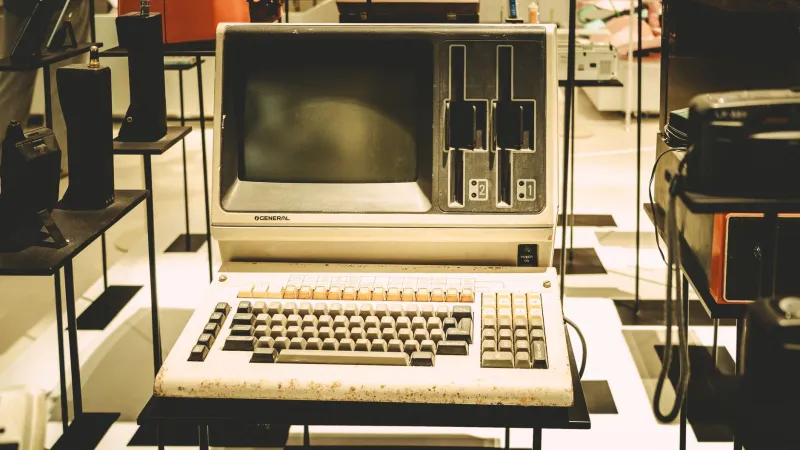
The same goes for communities built around discontinued fast food items, forgotten regional grocery store chains, and TV pilots that never got picked up. r/DeadMalls has essentially become a photographic archive of American commercial architecture in decline. r/ObsoleteMedia quietly documents formats that younger users have genuinely never encountered. These weren't designed as preservation projects. They just kept going.
"I didn't think of it as archiving," said one longtime moderator of a subreddit dedicated to a short-lived video game peripheral from the early 2000s. "I just didn't want the posts to get deleted. And then one day someone messaged me saying they were writing a book and our community had the only surviving scans of the original instruction manuals. That was a weird moment."
Weird, but not uncommon.
The Accidental Archaeologists
In academic circles, there's a concept called unintentional documentation — the idea that certain objects and texts reveal more about their era than anything deliberately recorded. A grocery list tells you more about daily life in 1950 than most history books. A comment thread about a discontinued breakfast cereal tells you something about American consumer culture, nostalgia cycles, and the strange loyalty people develop toward branded objects that no formal study ever quite captures.
That's what's happening in these communities, whether members realize it or not. They're doing archaeology. They're just also arguing about whether the original formula tasted better.
One member of a subreddit focused on a regional amusement park that closed in the early 2000s described the experience of going back through old posts as "reading letters from people who didn't know they were saying goodbye." Early threads are casual — trip reports, photo dumps, complaints about lines. Later ones take on a different weight. Users start documenting things more carefully. Someone starts a thread specifically for photos of rides that no longer exist. Someone else posts a recording of the park's background music they captured on a handheld recorder during their last visit.
By the time the park officially closed, the subreddit had become something closer to a memorial than a fan forum.
Why These Corners Matter
There's a tendency to dismiss hyper-niche online spaces as trivial. And sure, a subreddit about a particular flavor of discontinued chips isn't going to change the world. But the impulse to document — to say this existed, this mattered to someone, here's the proof — is genuinely significant, especially in an internet that moves fast and forgets faster.
Most of what gets lost online doesn't disappear dramatically. It just quietly stops being referenced. Links rot. Platforms change their algorithms. Communities migrate or splinter or get banned. The things people cared about deeply in 2008 or 2013 or even 2019 can become effectively invisible within a few years, not because anyone chose to erase them but because nobody thought to keep pointing at them.
These subreddits, weird and specific as they are, keep pointing.
"Someone found a post in our community from 2011 that had a working link to a manufacturer's support page," said a moderator of a subreddit for a brand of discontinued home audio equipment. "The page is long gone, but the post had screenshots. That's the only surviving documentation of a firmware update that apparently fixed a major issue with the hardware. Collectors still use it."
That's not a dramatic story. It doesn't have a hero. But it's real preservation, happening in a place that looks, from the outside, like just a bunch of people who really liked their old stereo.
The Problem With Accidental Archives
Of course, accidental archives come with accidental problems. Moderation in these spaces is often minimal — one or two people who volunteered years ago and have been loosely keeping the lights on ever since. There's no institutional backing, no redundancy plan, no budget. If Reddit changes its policies, if a moderator disappears, if the platform itself eventually goes the way of everything else, these communities and their accumulated knowledge go with it.
Some communities have started taking this seriously. Members export post archives to personal servers. Screenshots get uploaded to the Internet Archive. Someone starts a companion wiki. But these are individual efforts, driven by whoever happens to care enough at a given moment, and they're not guaranteed to last either.
There's something both beautiful and deeply precarious about that. These communities exist in a kind of suspended state — too specific to attract mainstream attention, too beloved to be abandoned, too fragile to be truly safe.
What Gets Left Behind
Scroll deep enough into any of these subreddits and you'll start to notice the shape of the community itself — the inside jokes that formed and calcified, the recurring posters whose usernames you start to recognize, the arguments that flared up and got resolved or didn't. You're not just reading about the thing the community loves. You're reading the community.
That's the part that's hardest to replicate and easiest to lose. Not the product specs or the photos or the documentation, but the texture of people caring about something together over a long period of time. The way a community develops its own language, its own rituals, its own sense of what counts as important.
That's not just digital archaeology. That's something closer to anthropology — a record of how people form attachments, build identity around objects and experiences, and find each other across distance and time because they both remember something that most people forgot.
Nobody planned for these subreddits to matter this much. They just kept showing up, kept posting, kept caring about their weird specific thing.
And now, accidentally, they've built something worth preserving.