Static Is a Room: Listening to Radio Stations That No Longer Know You’re There
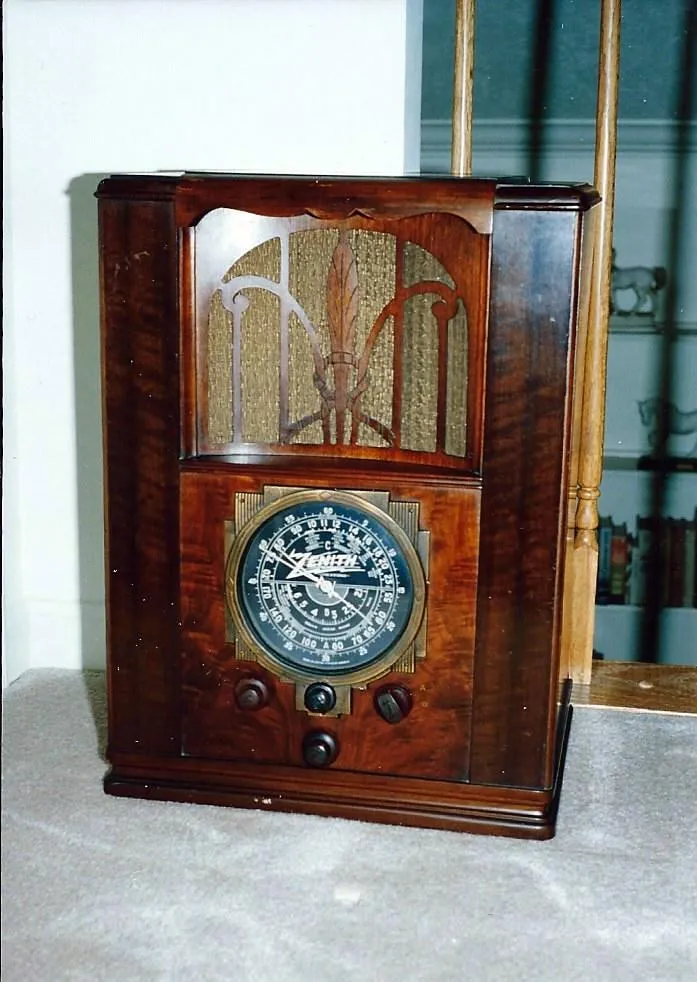
Photo: Joe Haupt from USA, CC BY-SA 2.0, via Wikimedia Commons
At 2:17 a.m. in Portland, a man named Eli opens a browser tab to a radio station that has not had a live host since 2019. The stream still works. It plays a loop of ambient synth, a soft hiss, and every eleven minutes a recorded voice says, “You’re listening to Night Signal.” There is no schedule. There are no ads. There is no chat. Eli puts in one earbud, lies down, and falls asleep before the next announcement.
The Stream That Forgot to End
Internet radio used to be a boomtown. Shoutcast and Icecast servers let anyone with a spare computer become a broadcaster. There were stations for jazz, for video game music, for local high school football, for people who just wanted to talk. Most of them died quietly. The server bill stopped being paid. The host moved on. The stream went dark.
But not all of them. Some streams are still running on autopilot, looping old playlists from a machine in someone’s basement or a cloud instance no one remembers. Some are “dead air” in the technical sense—silent, or nearly silent, with a faint hum that might be the sound of an open microphone in an empty room. Some are podcasts with no new episodes, just the same twelve files repeating. Some are ambient pages that play rain sounds and a single low tone, forever.
These are accidental soundscapes. No one designed them to be comforting. They were designed to be content, or at least to fill time. Now they fill a different kind of time: the long, unclaimed hours between midnight and morning.
What Silence Sounds Like With a Bitrate
Listeners describe the experience in almost physical terms. “It’s like sitting in a waiting room where no one is waiting,” says Renee, 38, in Baltimore. She listens to a station that broadcasts a looping piano piece and a recorded station ID every half hour. She found it while searching for something else and never closed the tab. “I don’t know who runs it. I don’t want to know. It feels like a room I can visit without knocking.”
The emptiness is not total. A stream always has texture. There is the compression artifact, the slight warble, the background hiss that becomes a kind of weather. There are the gaps between songs, which feel longer than they should. There is the moment when the loop restarts and you recognize the same song from an hour ago. These are not flaws. They are landmarks. They tell you where you are in the night.
Some listeners seek out truly silent streams—pages that once played audio but now transmit only a low bitrate nothing. Others prefer the opposite: stations that still play music but have no DJ, no news, no human voice except the automated ident. The absence of a host is the draw. No one is going to ask you to call in. No one is going to sell you something. No one is going to remind you that it is late.
Insomniacs and Accidental Ambient
There is a practical reason people fall asleep to these streams. White noise and steady sound mask the small noises of a house at night. A loop is predictable. Predictability is soothing. But the listeners I spoke with kept reaching for a less practical explanation. They described the streams as company without demand. A podcast host wants your attention. A radio station wants your ears. A dead stream wants nothing.
That nothing has a flavor. It is nostalgic for people who remember the early web, when a personal site could be a single page with a MIDI file and a hit counter. It is novel for younger listeners who grew up with algorithmic feeds and have never encountered a broadcast that does not know they are there. The stream cannot recommend anything. It cannot track you. It cannot change based on your behavior. It just keeps going.
At Nagemayet, we have spent a few late nights with these stations. They are not all beautiful. Some are annoying. Some cut out every few minutes. Some are clearly the work of one person who forgot to turn off a server. But that is part of the appeal. The internet is full of things that are optimized within an inch of their lives. A dead radio stream is not optimized. It is leftover. It is a signal with no sender, and somehow that makes it easier to trust.
The Comfort of a Signal With No Sender
Eli, in Portland, has a routine. He brushes his teeth, turns off the overhead light, opens the Night Signal tab, and sets his laptop on the floor. He does not listen to the words. He does not follow the songs. He listens to the fact that it is still there. “It’s like a night-light,” he says. “But for my ears.”
The station will probably go dark eventually. The server will fail. The domain will expire. Someone will notice and not renew it. Until then, the loop keeps looping. The recorded voice keeps saying its line. The hiss keeps filling the room. Somewhere, a listener is falling asleep to a broadcast that no longer knows anyone is listening. That may be the most peaceful thing on the internet.