Stopped Mid-Sentence: The TikTok Accounts Nobody Deleted and the Strangers Who Keep Visiting Them
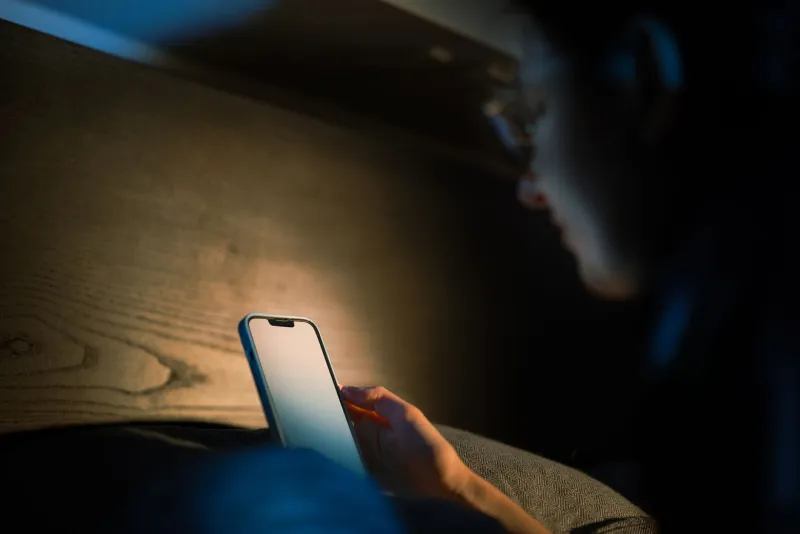
There's a specific kind of feeling you get when you land on a TikTok profile that hasn't posted in two years. The last video is still sitting there — maybe it's something ordinary, a half-finished recipe or a trending audio clip that peaked in a summer nobody remembers clearly anymore. The comments are still open. People are still leaving them. Where did you go? someone typed eight months ago. Nobody answered.
These aren't hacked accounts or abandoned spam profiles. They're real people who, at the height of something, just... stopped. No goodbye video. No pinned note. Just a last post that became, without anyone planning it, a kind of headstone.
The Freeze Frame
The algorithm doesn't really have a concept of retirement. It has engagement, it has momentum, and it has the slow death of irrelevance — but it doesn't account for the person who simply decides they're done. When a creator exits that way, without fanfare, the platform doesn't mourn them. It just keeps serving their content to new audiences who have no idea they're watching something that ended.
That temporal disconnect is part of what makes these frozen accounts feel so strange. A video posted in 2021 can surface on someone's For You page in 2024, generating fresh comments from viewers who assume the creator is still around. The account exists in a kind of permanent present tense, untethered from the actual timeline of the person who made it.
Some creators who've spoken about their departures — usually in interviews on other platforms, or in the occasional Reddit thread — describe a moment where the machine stopped feeling like it was working with them and started feeling like it was running through them. One creator, who had amassed a following in the mid-six figures by posting daily journaling content, described it as realizing she was performing intimacy rather than experiencing it. The moment that distinction became clear, she said, the whole thing became impossible to continue.
The Communities That Form in the Silence
Here's the part that gets genuinely weird: some of these abandoned accounts develop second lives entirely without the creator's participation.
On Reddit and Discord, small communities form around specific departed creators. They're not really fan communities in the traditional sense — there's no new content to celebrate, no upcoming projects to speculate about. Instead, they function more like reading groups for a finished book. People revisit old videos, trade observations, construct timelines. Some communities become almost archaeological in their approach, trying to understand who this person was based entirely on what they left behind.
There's something both touching and slightly unsettling about it. The creator made a deliberate choice to exit, and yet the audience — at least a portion of it — couldn't let the conversation close. The content outlived the creator's relationship to it, which is maybe the most honest thing that can be said about how parasocial connection actually works.
In some cases, creators become aware that these communities exist and find it deeply uncomfortable. The whole point of leaving was to stop being a character in someone else's feed. Discovering that you've become the subject of retrospective analysis — even affectionate analysis — can feel like the exit never quite worked.
Why They Left (And Why It's Hard to Explain)
The easy narrative is burnout. And burnout is real — the content treadmill that TikTok's algorithm demands is genuinely brutal, particularly for solo creators without teams or budgets. Posting daily, chasing trends, responding to comments, managing the emotional labor of being perceived by tens of thousands of strangers: it's a lot, and it compounds fast.
But a lot of the creators who disappeared mid-popularity weren't burning out in the conventional sense. They weren't exhausted so much as they were done. There's a difference. Burnout implies you want to keep going but can't. These departures feel more like a quiet, clear-eyed decision that the whole arrangement had stopped making sense.
Some describe a growing mismatch between who they actually were and who the algorithm had trained their audience to expect. TikTok's feedback loops are powerful — they reward consistency, and consistency over time tends to calcify a creator into a version of themselves that audiences recognize but that the actual person may have already grown past. Walking away becomes a way of refusing to keep performing a self that no longer fits.
Others point to something harder to articulate: a feeling that visibility itself had become corrosive. Not the attention, exactly, but the constancy of it. The way it colonized ordinary moments, making everything a potential post, every experience a potential hook.
What the Empty Profiles Actually Preserve
There's an archival quality to these accounts that's easy to overlook. A creator who was posting consistently in 2020 and stopped abruptly has left behind something that functions, unintentionally, as a document of a very specific cultural moment. The sounds they used, the aesthetics they favored, the way people talked in the comments — it's all frozen there, weirdly intact.
Internet historians — and yes, that's a real thing people do — have started paying attention to this. The voluntary disappearance of a mid-tier creator is, in some ways, more interesting as an artifact than the ongoing feed of someone still active. The active feed is always being revised, always optimizing. The abandoned account is fixed. It can't be edited retroactively. It just sits there, being exactly what it was.
That's a strange kind of honesty in a space that's usually relentlessly forward-facing.
The Scroll Doesn't Stop for Anyone
Maybe the most quietly radical thing about these creators is what their absence implies about the whole system. TikTok — and the algorithmic content economy more broadly — operates on the assumption that visibility is the goal, that more is always better, that the logical endpoint of a growing audience is a bigger audience. The person who walks away from a hundred thousand followers at their peak is essentially rejecting that premise. They're saying: this was enough, and also it was too much, and I'm choosing neither.
The platform has no framework for that. It can't really account for the human being who decides that obscurity, chosen deliberately, is preferable to fame that runs on a treadmill.
So the accounts just sit there. The last video plays on a loop for strangers who will never know the full story. The comments accumulate. Someone new finds the profile, watches everything, and types into the void: I really hope you're doing okay.
Sometimes that's the whole internet, really. Talking to people who've already moved on.