Break on Purpose: The Digital Artists Who Made Failure the Whole Point
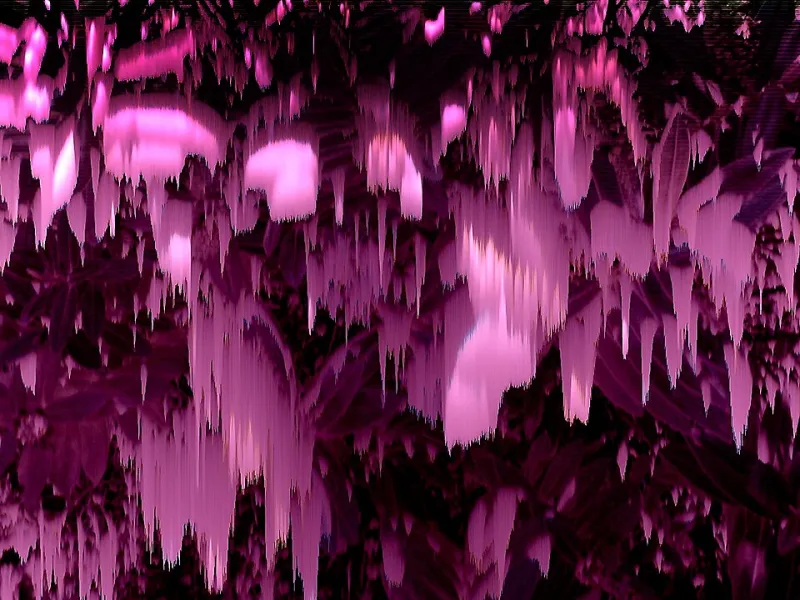
Photo: Brocken Inaglory, CC BY-SA 3.0, via Wikimedia Commons
The loading spinner has been spinning for three minutes. The button you clicked does nothing. The page refreshes and shows you something completely different from what was there before. Your first instinct is probably annoyance—maybe you check your wifi, maybe you reload the tab.
But what if none of that was an accident?
A loosely connected movement of digital artists is building work that intentionally malfunctions. Glitches engineered from scratch. Error messages written by hand. Websites that exist specifically to not behave the way websites are supposed to. And the art world—at least the corners of it comfortable with niche weirdness—is paying attention.
Dysfunction as Design Language
To understand why someone would build something broken on purpose, you have to understand what it feels like to exist online in 2024. The modern web is over-optimized. Everything loads fast. Everything is frictionless. Every interaction is A/B tested and user-researched into a smooth, frictionless experience designed to extract maximum engagement with minimum resistance.
In that context, something that resists you is almost radical.
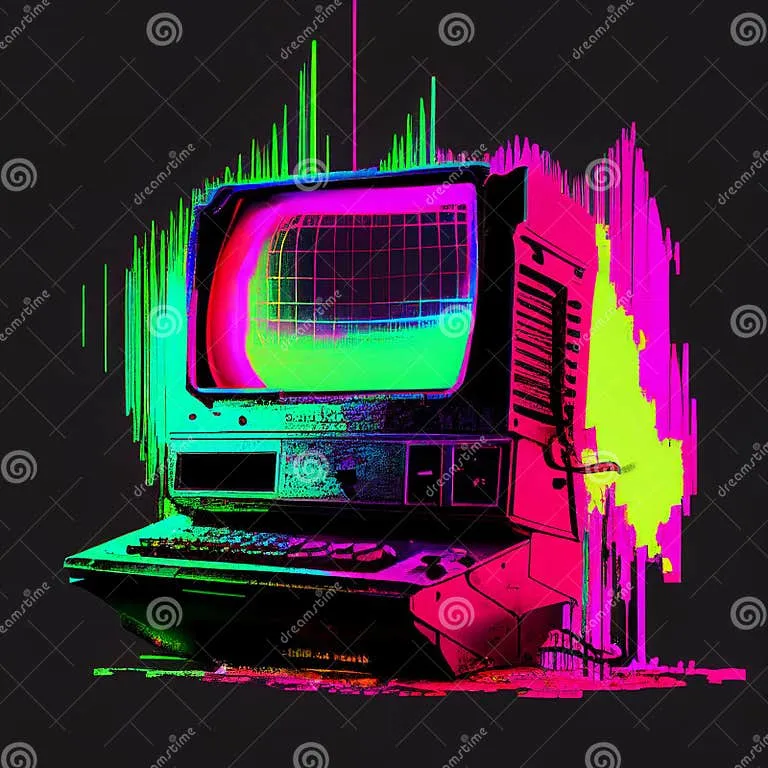
Artists working in what some loosely call "error aesthetics" or "glitch poetics" are exploiting exactly that tension. When a digital experience breaks in a controlled, deliberate way, it snaps you out of the passive consumption mode that most of the internet is designed to keep you in. You stop scrolling and start noticing. The dysfunction becomes a kind of interruption—and the interruption is the message.
This isn't entirely new. Glitch art has been around since at least the 1990s, when early net artists started playing with corrupted image files and broken HTML. But the current wave feels different in scale and philosophical ambition. These aren't just visual experiments. They're arguments.
The Corrupted Machine
One of the most active areas of this movement right now involves AI-generated content—specifically, AI outputs that artists deliberately corrupt, constrain, or misdirect.
The standard use of generative AI tools is pretty straightforward: you prompt, the system produces, you refine. But some artists are introducing interference at every stage. They're feeding models nonsensical training data. They're interrupting generation mid-process and forcing the output into formats it wasn't designed for. They're asking image generators to describe their own error states and then generating images from those descriptions.
What comes out of these processes is genuinely strange—images that look like they're trying to remember something they were never taught, text that circles a meaning without ever landing on it. There's a visual vocabulary developing around this work that feels new: not the clean surrealism of polished AI art, but something rougher, more anxious, more honest about the weirdness underneath the technology.
The philosophical angle here is pointed. AI tools are sold to us as reliable, neutral, almost magical in their competence. Artists deliberately breaking those tools are asking: what happens when the magic fails? What does the machine look like when it's confused? And what does our discomfort with that confusion tell us about how much we've decided to trust these systems?
Websites That Work Against You
Beyond AI, there's a whole subcategory of this movement built around deliberately dysfunctional web experiences.
Think about websites where the navigation links go somewhere different each time you click them. Pages where the text rearranges itself while you're reading. Interfaces that pretend to load something important and then deliver something absurd. Forms that accept your input and then ask you to re-enter it in a format that doesn't exist.
Some of these projects live on platforms like itch.io, where experimental game developers and net artists share work that doesn't fit anywhere else. Others exist as standalone URLs, shared quietly through Discord servers and Mastodon threads and the kind of group chats where people send each other weird links at 2 a.m.
The best of these experiences have a specific quality: they make you feel watched. Not in a paranoid way, but in the way that a piece of performance art makes you feel like someone is very deliberately doing something in front of you, waiting to see how you respond. The broken interface becomes a kind of stage.
The Galleries Paying Attention
The institutional art world has been slow to catch up, but some spaces are genuinely engaging with this work. Online galleries like Rhizome have long championed experimental net art, and their digital preservation projects have documented some of the earlier glitch art movements that laid groundwork for what's happening now.
More recently, smaller, weirder venues have emerged—Discord-based galleries that exist entirely within a server, rotating exhibitions of deliberately broken websites, zine-style publications distributed as intentionally corrupted PDF files. These aren't trying to be the next MoMA. They're operating in the margins by design, which feels appropriate for work that's fundamentally about what happens at the edges of systems.
Some artists in this space have also found audiences through social media, which creates a funny kind of irony: posting deliberately broken work on platforms that are themselves highly optimized for smooth engagement. The glitchy video that stops and restarts in an app designed to keep you watching. The corrupted image shared on a platform that auto-enhances everything. The dysfunction stands out precisely because it's surrounded by so much engineered perfection.
What Breaking Things Means
At its core, this movement is about control—specifically, about who has it and what happens when it slips.
The modern digital experience is controlled at every level. Platforms control what you see and in what order. Algorithms control what gets amplified. Design systems control how you interact with everything. Even the errors you encounter are usually managed: friendly 404 pages, smooth loading states, gentle nudges back toward the intended path.
Artists building deliberately broken work are refusing that management. They're introducing real uncertainty into an environment engineered to eliminate it. And in doing that, they're asking a question that doesn't have a clean answer: if everything works perfectly, all the time, optimized for your engagement and comfort—what exactly are you experiencing? And is that experience actually yours?
The spinner keeps spinning. The page keeps refreshing. Something is happening here, even if—especially if—you can't quite tell what.