Something Went Wrong and It Looks Like This: The Visual Language of Digital Dread
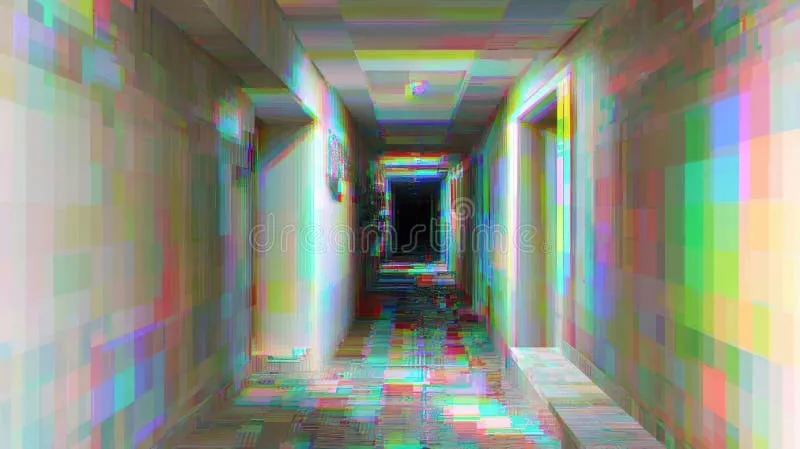
Photo: glitched corrupted digital image aesthetic uncanny empty hallway, via thumbs.dreamstime.com
You've seen the images. A dog sitting in a chair at a kitchen table, lit wrong, staring at something outside the frame. A Walmart at 4 a.m., every aisle empty, the fluorescent lights doing something to the linoleum that makes the whole thing look like a stage set with no audience. A JPEG compressed so many times it's become a kind of abstract painting — a face visible somewhere in the noise, or maybe not, depending on how long you look.
These images don't have a single origin. They emerged from different corners of the internet at different times, through different mechanisms. But somewhere along the way, they converged into something coherent: a shared visual vocabulary for a feeling that's surprisingly hard to put into words.
Call it digital dread. The internet knows exactly what it looks like.
The Cursed Image Genome
The term "cursed image" has a traceable history, more or less. The Tumblr account Cursed Images — launched around 2015, attributed to a user named Padraic, later migrated across platforms — is often cited as the formalization of the genre. But the account didn't invent the aesthetic so much as name something that already existed in scattered form across image boards, early Reddit, and the darker reaches of early social media.
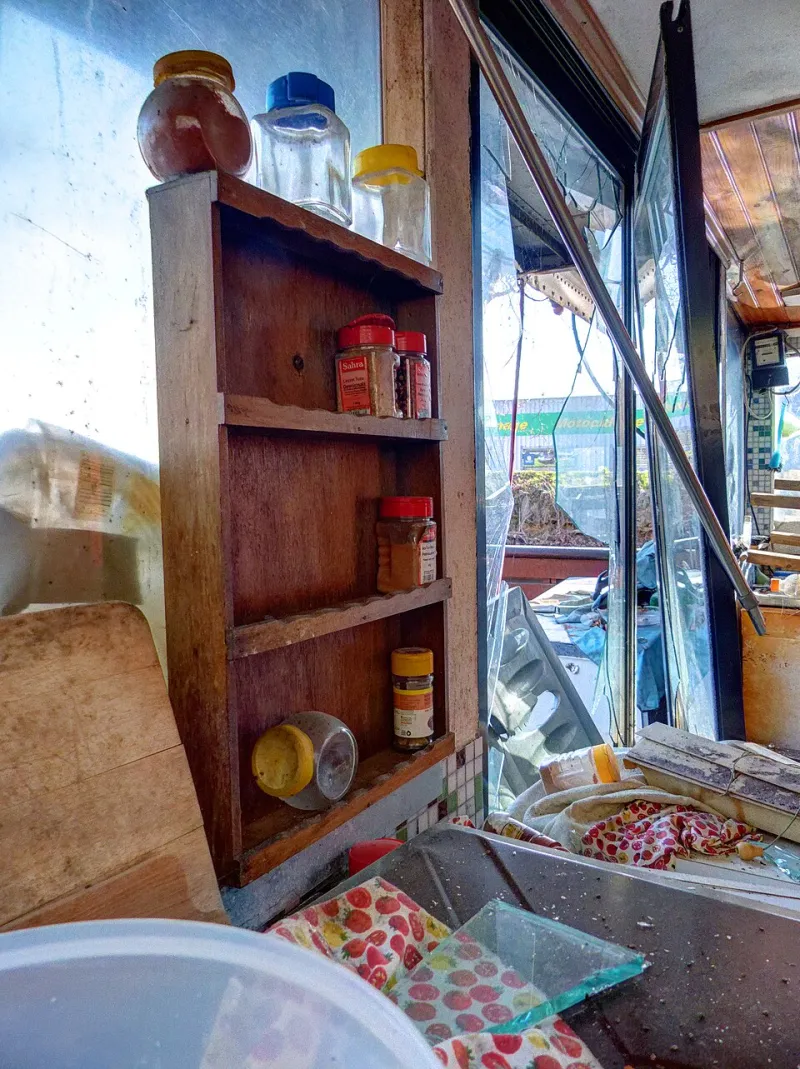
What makes an image cursed, technically? The community definitions are loose but consistent. A cursed image is one that produces unease without a clear source. Something is wrong in it, but you can't immediately identify what. The wrongness might be compositional — a figure positioned in a way that suggests awareness of the camera without acknowledging it. It might be contextual — an object in a place it has no business being. It might be purely tonal, a quality of light or shadow that makes a mundane scene feel like evidence of something.
The crucial element is that the unease is unresolved. A horror movie image is scary because it shows you something frightening. A cursed image is unsettling because it shows you something that shouldn't be unsettling but is, and it never explains why.
Deep Frying the Signal
Parallel to the cursed image tradition, a different aesthetic was developing in meme culture — one that weaponized visual degradation itself.
Deep-fried memes, which peaked in visibility around 2016-2018 but never really went away, are images that have been subjected to extreme compression artifacts, aggressive color saturation, noise filters, and repeated re-saving until the original image is barely legible underneath the damage. The joke, if there is one, is buried under so many layers of visual entropy that finding it feels like an archaeological dig.
On the surface, deep-frying looks like pure absurdism. But there's something more deliberate happening in the best examples of the form. The degradation is a commentary on how information moves online — compressed, re-shared, stripped of context, warped by each new platform's encoding until the original signal is almost unrecognizable. A deep-fried meme looks like what it feels like to receive information that has been passed through too many hands.
Some researchers who study internet culture have pointed to deep-frying as an early example of online communities aestheticizing their own anxiety about information reliability. If you can't trust what you're seeing, you might as well make the untrustworthiness beautiful.
The Backrooms and the Architecture of Wrong
Liminal space photography arrived at the cultural conversation more recently but hit differently. The images — empty swimming pools, fluorescent-lit office hallways, hotel lobbies at 3 a.m., playgrounds in fog — share a quality that's harder to pin down than pure wrongness. They look like places you've been, or places you've been in dreams about places you've been. They feel like loading screens for a reality that never fully rendered.
The Backrooms, a creepypasta that originated on 4chan in 2019 and has since expanded into an entire collaborative mythology, formalized the liminal space aesthetic into something approaching a genre. The original image — a yellow-carpeted, fluorescent-lit office space that appears to go on forever — became a kind of Rorschach test. People kept adding to the lore not because anyone coordinated them to, but because the image seemed to demand continuation. It felt unfinished in a way that invited completion.
What the Backrooms tapped into, and what liminal space photography more broadly captures, is something specific to the experience of navigating digital spaces. The internet has always had a geography — pages that feel like rooms, forums that feel like buildings, platforms that feel like cities. Most of us have experienced the version of that geography that feels wrong: a thread that goes on too long, a website that hasn't been updated since 2003, a corner of a platform where the normal social cues don't seem to apply. Liminal space imagery is that feeling made literal and architectural.
AI Corruption and the New Uncanny
The most recent chapter in this visual history involves AI-generated and AI-corrupted imagery, and it's where the genre gets genuinely strange.
Early AI image generation — the kind that produced nightmare hands and faces that almost resolved into recognizable features before sliding away — produced cursed images almost by accident. The technology's failure modes happened to align perfectly with the aesthetic that internet communities had spent years developing a taste for. A face generated by an early GAN model looks cursed not because anyone made it that way, but because the model's understanding of faces is structurally incomplete in a way that human perception finds deeply uncomfortable.
As AI image generation has gotten more technically proficient, some creators have started deliberately introducing the old failure modes back in. They're using newer tools to recreate the uncanny quality of older, worse tools — essentially faking the aesthetic of technological anxiety using technology that's no longer actually anxious.
There's something almost poetic about that recursion. The internet developed a visual language for technological dread, and then got good enough at technology to manufacture the dread artificially.
What the Images Are Actually Saying
Taken together, these visual traditions — cursed images, deep-fried compression artifacts, liminal space photography, AI corruption aesthetics — form something coherent. They're a collective attempt to represent experiences that the normal vocabulary of images wasn't built to handle.
The feeling of navigating a space that was designed for humans but feels like it wasn't. The experience of receiving information that has been so thoroughly processed it no longer has a clear origin. The specific unease of looking at something that is almost right but isn't quite. These are experiences that are native to digital life, and the internet, characteristically, developed its own way of talking about them.
The images spread because they resonate. Because somewhere in a fluorescent hallway or a glitched JPEG, people recognize something they've felt but couldn't name. The internet made the feeling, and then made the art about the feeling, and somehow both of those things happened mostly by accident.
That might be the most cursed part of all.